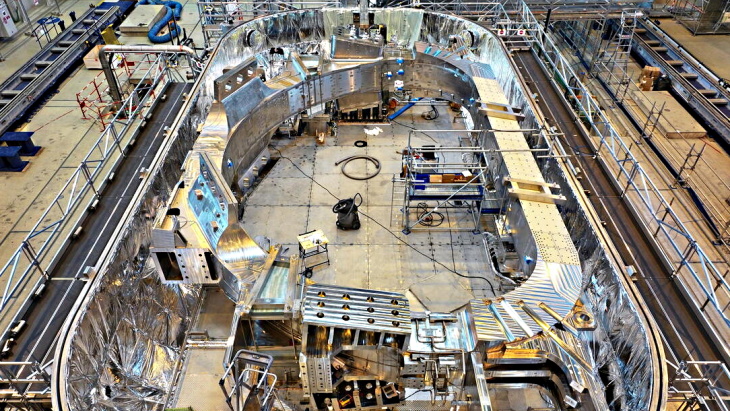

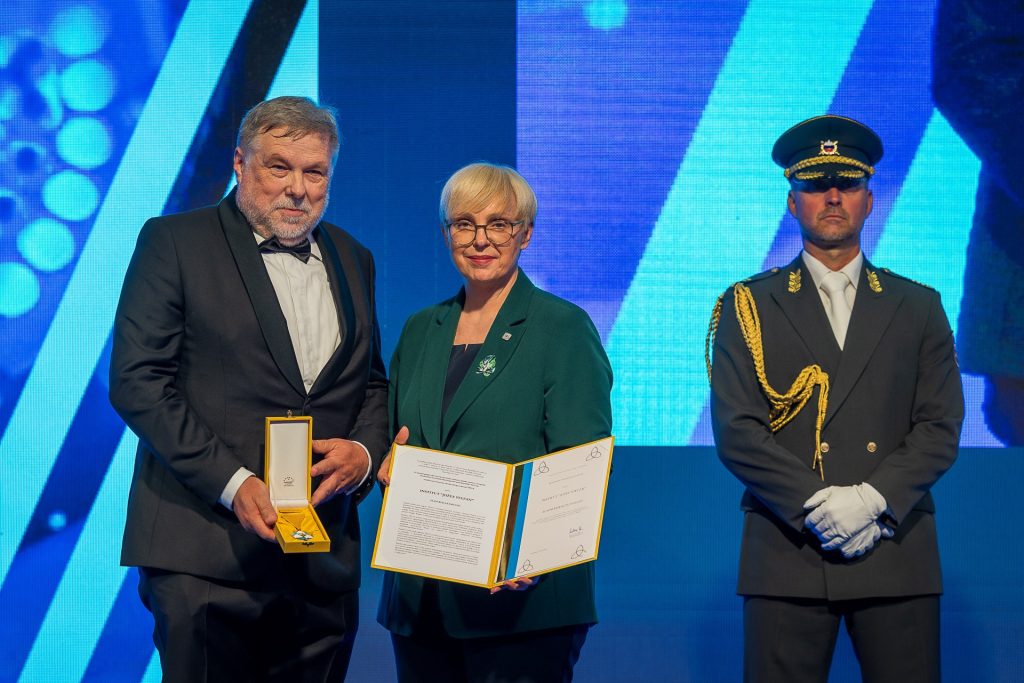
Slovenia has celebrated the 60th anniversary of the TRIGA research reactor at the Jožef Stefan Institute in Ljubljana. During the ceremony, President Nataša Pirc Musar awarded the institute the Golden Order of Merit in recognition of its outstanding contribution to scientific development, nuclear safety, energy independence, and Slovenia’s international reputation. Since it first reached criticality on 31 May 1966, the TRIGA reactor has played a central role in educating generations of nuclear scientists, engineers, and radiation protection experts. It has supported research in reactor physics, neutron activation analysis, neutron radiography, and isotope production for medicine and industry. Today, the reactor serves as an internationally recognised research facility involved in advanced projects, including collaborations related to CERN and ITER. Institute representatives stressed that the reactor remains scientifically relevant through continuous adaptation to new research fields. The anniversary also highlights Slovenia’s ongoing discussions about expanding nuclear energy through a potential new reactor unit at Krško Nuclear Power Plant.
A new report by the US-based Deon Policy Institute concludes that there are no fundamental technical barriers to deploying floating nuclear power plants (FNPPs) in Greece. The study argues that the main challenge is not technological feasibility but the creation of appropriate policy, legal, regulatory, and financial frameworks. According to the report, Greece’s strong maritime tradition, extensive port infrastructure, growing shipbuilding sector, and numerous inhabited islands make floating nuclear technology a potentially attractive option. FNPPs could support electricity generation, desalination, energy security, and climate objectives. The report also highlights the need to develop local supply chains, workforce expertise, and regulatory coordination among maritime, nuclear, and energy authorities. Public acceptance remains a significant issue, as support for nuclear energy in Greece is relatively low despite somewhat more favourable perceptions of floating reactors. Greece currently has no commercial nuclear power plants and relies heavily on natural gas, renewable energy, and electricity imports, particularly from neighbouring countries.
EDF Energy’s 2026 Socio-economic and Environmental Impact Report highlights the wide-ranging benefits of the Hinkley Point C nuclear power plant project for local communities, skills development, and the British economy. The project’s three training centres have helped around 19,500 people gain qualifications, while 1,740 apprentices have been trained, significantly exceeding the original target of 1,000. Nearly 70% of apprentices come from southwest England, and women account for 21% of participants. Economically, GBP 5.4 billion has been spent with around 1,500 regional businesses, strengthening local supply chains and supporting new industrial investments across the UK. Community benefits include more than GBP 20 million distributed to 385 local projects, benefiting over 600,000 people. Environmental initiatives include seagrass restoration, fish protection measures, and habitat creation supporting local wildlife. EDF argues that Hinkley Point C is not only delivering future low-carbon electricity but also creating skills, jobs, industrial capabilities, and long-term economic growth that will support future projects such as Sizewell C.
A major decommissioning milestone has been achieved at the former Trawsfynydd nuclear power plant in North Wales with the completion of a 20-year programme to remove all remaining intermediate-level radioactive waste from the site. After operating from 1965 to 1991, the Trawsfynydd site has since focused on decommissioning and hazard reduction. The programme involved the retrieval, treatment, packaging and safe storage of intermediate-level waste, resulting in nearly 2,300 waste packages being prepared for long-term on-site storage. Innovative technologies, including robotic arms and specialised vacuum systems, were used to safely access and remove radioactive materials from difficult locations. The project significantly reduced the site’s radiological hazards and provided valuable experience that has been shared across the UK nuclear decommissioning sector. With the waste programme now complete, the site is entering a new phase of decommissioning. Future work includes reducing the height of the two reactor buildings from approximately 54 metres to 25 metres, a project expected to take up to four years.
Constellation Energy has announced that the restart of the Three Mile Island Unit 1 nuclear power plant in Pennsylvania remains on schedule for 2027 after receiving a key waiver from the US Federal Energy Regulatory Commission (FERC). The waiver allows the company to transfer 760 MW of grid interconnection and capacity rights from its Eddystone gas-fired power plant to the renamed Crane Clean Energy Center, helping to avoid delays that could have postponed the project until 2031. The 819 MW pressurised water reactor ceased operation in 2019 due to economic pressures and competition from lower-cost energy sources. In 2024, Constellation signed a 20-year power purchase agreement with Microsoft to supply electricity to regional data centres. The project also received a USD 1 billion loan from the US Department of Energy in 2025 to support restart activities. Unit 2, the reactor involved in the 1979 accident, remains under decommissioning and is not part of the restart project.
The ITER Organization has announced the start of operations at its Magnet Cold Test Facility in Cadarache, France, following the successful cooling of the first superconducting magnet coil to 4 Kelvin (-269°C). The facility was established as part of ITER’s revised assembly and commissioning strategy and enables selected superconducting magnets to be tested under operating conditions before installation in the fusion reactor. The first component undergoing testing is a 330-tonne toroidal field coil made from niobium-tin superconducting material. After a 12-day cooldown process, the coil reached its superconducting state and is now ready for high-current testing. The programme aims to verify insulation performance, quench detection systems, electrical interfaces, instrumentation, and magnet protection functions. Each testing campaign is expected to last four to six months. ITER considers the facility an important risk-reduction measure that will improve readiness for reactor commissioning. Following ITER testing activities, the facility will also be made available to support research and development across the wider fusion industry.