

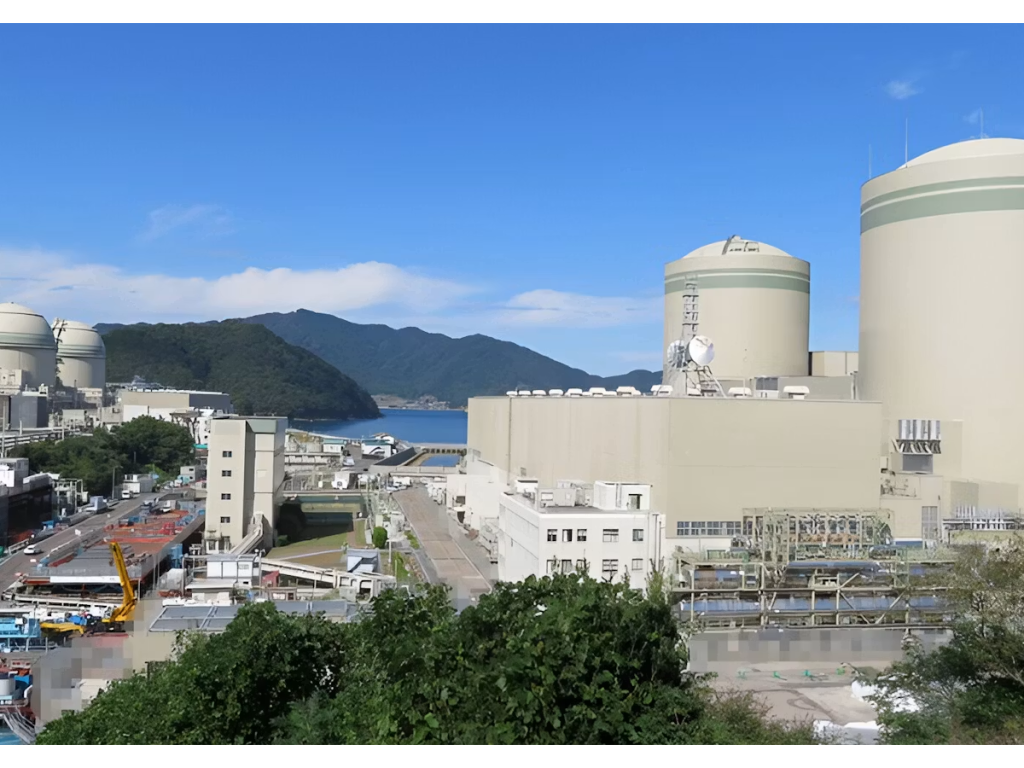
Japan plans to replace ageing nuclear reactors as part of a long-term strategy to strengthen energy security, reduce fuel imports and meet growing electricity demand. According to a draft policy presented by the Ministry of Economy, Trade and Industry (METI), the country aims to replace between two and five reactors by the 2040s and a total of 11 to 14 reactors by the 2050s. This is the first official numerical target for reactor replacement since the 2011 Fukushima Daiichi accident. The government believes that setting clear goals will help secure the skilled workforce needed by the nuclear sector. Under Japan’s latest energy plan, nuclear power is expected to increase its share of electricity generation from 8.5% in fiscal year 2023 to around 20% by 2040. Renewable energy is projected to supply 40–50% of electricity, while fossil fuels will decline significantly. Fifteen reactors have already restarted operation, while additional units remain under review for post-Fukushima safety approval.
Italy has taken another significant step towards reintroducing nuclear energy after the Chamber of Deputies approved a government bill that establishes the legal framework for the sector’s return. The legislation, proposed by Prime Minister Giorgia Meloni’s government, was adopted with 155 votes in favour, 86 against and eight abstentions. The bill delegates authority to the government to regulate the introduction of “sustainable” nuclear power in line with European decarbonisation goals and energy security objectives. Planned measures include the creation of a National Programme for Sustainable Nuclear Power, the establishment of an independent Nuclear Safety Authority, support for scientific and industrial research, workforce development and public information activities. The legislation will now be considered by the Senate, where final approval is expected before the summer recess. Italy phased out nuclear power following a referendum after the Chernobyl accident and closed its last reactors in 1990. However, growing concerns about energy security and decarbonisation have led to renewed political support for nuclear energy.
Turkey’s first nuclear power plant, Akkuyu, has reached an important commissioning milestone with the successful loading of 163 dummy fuel assemblies into Unit 1. The assemblies are identical to real nuclear fuel in size, weight and design, but contain no nuclear material. Their purpose is to test fuel-handling systems, verify operational procedures and prepare personnel for the future loading of actual fuel. The operation was conducted under the supervision of Turkey’s Nuclear Regulatory Authority and represents a full-scale rehearsal before cold and hot functional testing of the reactor systems. According to Akkuyu Nuclear CEO Sergei Butckikh, the exercise confirms the readiness of both equipment and staff for the next stages leading to reactor startup. Akkuyu, located in Mersin Province, is Turkey’s first nuclear power plant and is being built by Russia’s Rosatom. The four-unit VVER-1200 facility is expected to provide about 10% of Turkey’s electricity demand when fully operational. Unit 1 is scheduled to begin supplying electricity during 2026.
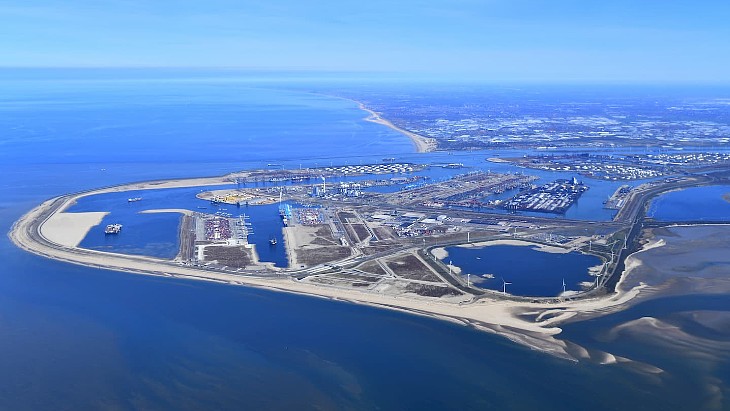
A joint report by Core Power, Maersk, Lloyd’s Register and the Port of Rotterdam examines the feasibility of port calls by nuclear-powered commercial ships in European ports. Using the example of a hypothetical nuclear-powered Maersk container vessel visiting the Port of Rotterdam, the study evaluates safety, regulatory and operational requirements. The report concludes that the main obstacles are not technical, but rather regulatory harmonisation, governance, risk management and public acceptance. The authors argue that ports should begin preparing now for the possible arrival of nuclear-powered vessels by developing legal frameworks, emergency procedures and cooperation with nuclear authorities. Additional research and communication are needed on radiation safety, accident scenarios, security threats and their potential impacts on ports, terminals and personnel. The study emphasises that each port must conduct its own assessment of safety, security and safeguards. The work supports broader international efforts, including activities by the International Maritime Organization and the International Atomic Energy Agency, aimed at exploring nuclear propulsion as a low-carbon option for future maritime transport.
The Japan Atomic Energy Agency (JAEA), the UK’s National Nuclear Laboratory (NNL) and Rolls-Royce have signed cooperation agreements to accelerate the development of High-Temperature Gas-Cooled Reactors (HTGRs) and the advanced coated particle fuel required for their operation. The partnership expands existing UK-Japan collaboration and aims to support the deployment of advanced modular reactor technologies for clean energy, industrial decarbonisation and energy security. Rolls-Royce is developing a compact HTGR-based Advanced Modular Reactor (AMR) with an electrical output of up to 25 MWe per unit, suitable for industrial sites, remote locations and microgrids. The project combines Japan’s decades of experience with HTGR technology, gained through the High Temperature Engineering Test Reactor programme, with the UK’s expertise in fuel development and reactor innovation. The partners believe the collaboration can help accelerate commercial deployment of advanced reactors, create skilled jobs and strengthen industrial growth. The initiative also supports both countries’ net-zero ambitions and positions the UK and Japan as leaders in next-generation nuclear technologies.
The United Kingdom has agreed to guarantee a GBP 210 million loan to support supplies of enriched uranium for Ukraine’s state nuclear operator, Energoatom, over the next two years. The agreement was confirmed during talks between UK Prime Minister Keir Starmer and Ukrainian President Volodymyr Zelenskyy in London. The financing, backed by UK Export Finance, builds on previous cooperation aimed at securing fuel supplies for Ukraine’s nuclear power plants. More than one-third of the enriched uranium will originate from Urenco’s enrichment facility in northwest England, supporting jobs and exports in the UK nuclear sector. Urenco has been supplying Energoatom since 2009 and, under a contract signed in 2023, will continue providing enriched uranium until at least 2035. Canada’s Cameco will supply natural uranium for the fuel cycle. Ukraine relies heavily on nuclear energy, with its reactor fleet providing around half of the country’s electricity. The agreement strengthens Ukraine’s energy security and reduces dependence on Russian nuclear fuel supplies.
The Swedish parliament has approved amendments to the Nuclear Activities Act that create a clearer regulatory framework for future uranium mining projects. Under the new rules, uranium mining will no longer be classified as a nuclear activity, meaning that uranium extraction projects will not require the explicit consent of local municipalities. The measure is part of a broader energy policy reform aimed at supporting the expansion of nuclear power in Sweden. It follows the lifting of Sweden’s long-standing ban on uranium exploration and mining, which took effect in January 2026. The legislative changes are expected to simplify permitting procedures and encourage investment in domestic uranium resources. One potential beneficiary is the Haggan deposit in central Sweden, owned by Australian company Aura Energy, which contains an estimated 800 million pounds of uranium and is considered one of the world’s largest undeveloped uranium resources. The Swedish government views domestic uranium production as a possible contributor to future energy security and nuclear fuel supply.