

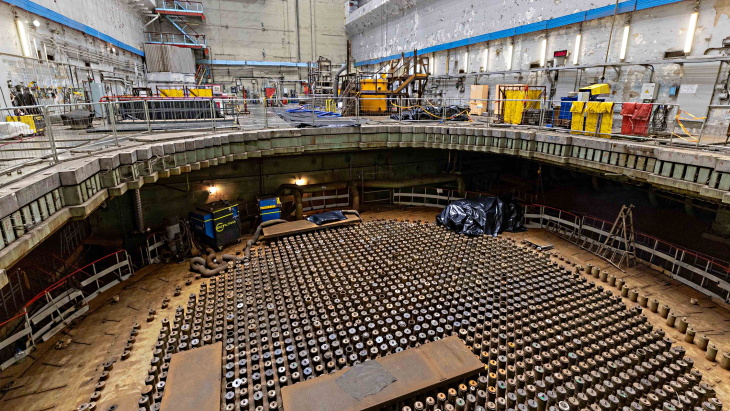
Tender launched for dismantling of Ignalina cores
Lithuania’s state-owned decommissioning company Altra has launched an international tender for the dismantling of the reactor cores at the two RBMK-1500 units of the Ignalina Nuclear Power Plant. The contract, valued at approximately EUR 400 million, covers engineering design, licensing, the supply of specialised dismantling equipment, reactor core dismantling, and radioactive waste management. Around 25,000 tonnes of material, including significant quantities of long-lived radioactive waste, will be removed, making the project one of the most technically demanding nuclear decommissioning operations ever undertaken. The two-stage tender is being conducted through the European Bank for Reconstruction and Development (EBRD), with contract award expected in 2027 and project completion estimated to take 16 years. Financed by the European Commission through the Ignalina International Decommissioning Support Fund, the project will make Lithuania the first country to fully dismantle RBMK-1500 reactor cores, providing valuable experience and technological solutions for future decommissioning projects worldwide.
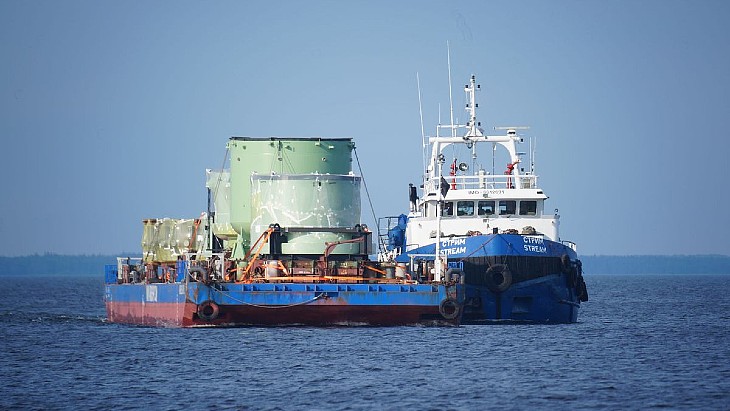
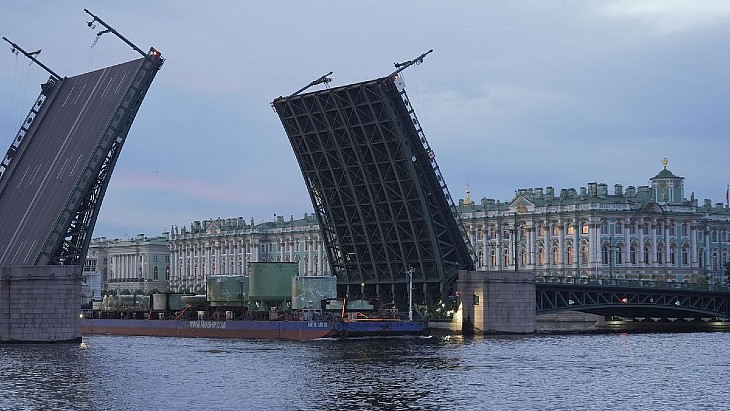
The core catcher for Unit 8 of Russia’s Leningrad II Nuclear Power Plant has arrived at the construction site after a 2,000-kilometre, 16-day journey by water through several rivers, lakes and the Gulf of Finland. The component will soon be transported from the port at Sosnovy Bor to the reactor building, where installation in the reactor shaft is scheduled for later this month. Plant officials aim to complete the installation two months ahead of schedule, allowing construction to progress more quickly toward the planned installation of the reactor pressure vessel in 2029. The core catcher is a key passive safety component designed to retain and cool molten reactor core material in the unlikely event of a severe accident, preventing radioactive material from escaping the containment. Units 7 and 8 of the Leningrad II plant, equipped with VVER-1200 reactors, are being built to replace the ageing RBMK reactors at the original Leningrad Nuclear Power Plant.
ČEZ has launched the process to extend the operating lifetime of the two Temelín nuclear power plant units from the originally planned 60 years to 80 years, allowing them to operate until 2080 and 2082. The decision follows several years of technical and economic assessments and will require significant investment in plant modernisation. Planned upgrades include replacing turbogenerators, modernising the instrumentation and control systems, constructing a new maintenance hall for large equipment, and replacing cooling water pipelines. The two VVER-1000 reactors have already undergone upgrades that increased their electrical output from 1,000 MWe to 1,086 MWe each. Czech authorities emphasise that any lifetime extension will depend on meeting strict safety requirements and regular regulatory reviews. The move complements similar plans for the Dukovany nuclear power plant and supports the Czech Republic’s long-term strategy of maintaining nuclear energy as a key source of low-carbon electricity while also developing new large reactors and small modular reactors.
Cameco Resumes Production At Cigar Lake Uranium Mine
Cameco has resumed uranium production at its Cigar Lake mine in northern Saskatchewan after a temporary suspension caused by operational issues at Orano’s McClean Lake mill, where the mine’s ore is processed. The interruption was linked to problems with the mill’s sulphuric acid plant, which affected ore processing. Following the restart of the McClean Lake facility, Cigar Lake has resumed shipping stockpiled ore to the mill and restarted mining operations. Cameco stated that the temporary disruption will not affect its 2026 production forecast, which remains between 17.5 million and 18.0 million pounds of U₃O₈ on a 100% basis. The company also noted that Orano had explored alternative sulphuric acid supplies while repairs were carried out. Earlier this year, Cameco’s Key Lake mill and McArthur River mine also experienced temporary operational disruptions due to flooding in northern Saskatchewan, but both facilities returned to operation by the end of May.
Podcast: The US’s historic Hanford site, and accelerated decommissioning
A new podcast highlights how nuclear decommissioning sites, such as the Hanford Site in the United States, should be viewed not as liabilities but as valuable assets for future economic development. Hanford, established during the Manhattan Project, is home to the world’s largest radioactive waste cleanup programme, involving 177 underground tanks containing approximately 56 million gallons of radioactive and chemical waste. Experts from Amentum emphasise that successful decommissioning should include long-term planning for site regeneration, industrial redevelopment and the reuse of existing infrastructure. They argue that former nuclear sites offer significant advantages, including skilled workforces, grid connections, regulatory approvals and supportive local communities, making them attractive for new nuclear projects or other industries. The discussion also highlights the role of innovative technologies, robotics and improved project planning in accelerating decommissioning while maintaining the highest safety standards. According to the speakers, greater private investment could be attracted by recognising the long-term economic value of these sites rather than viewing decommissioning solely as a financial burden.