
Skanska contracted for Swedish repository expansion work
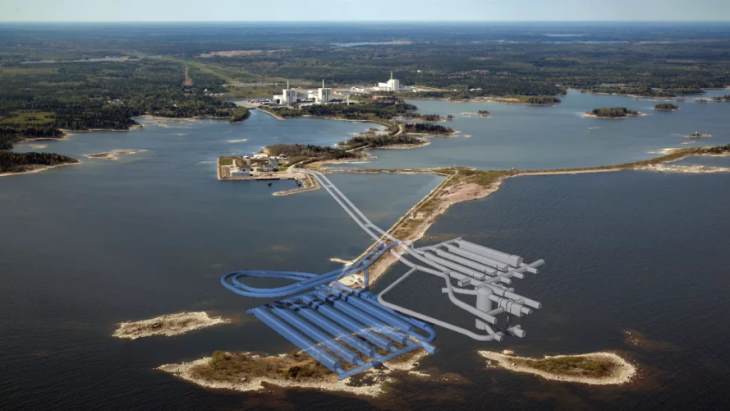
Swedish construction company Skanska has signed a contract worth approximately SEK 1 billion (USD 100 million) with the Swedish Nuclear Fuel and Waste Management Company (SKB) to construct new rock caverns for the expansion of the SFR repository in Forsmark. The underground facility, which has been operating since 1988, is used for the final disposal of low- and intermediate-level radioactive waste and is located beneath the Baltic Sea. The expansion will add six new rock vaults at a greater depth, increasing the repository’s capacity from about 63,000 to 180,000 cubic metres. The newly awarded contract covers excavation, civil engineering, earthworks, water and sanitation infrastructure, and tunnel lining. Construction of the new caverns is scheduled to begin in the third quarter of 2026 and be completed by the end of 2028, with test operation planned for 2030–2031. The expansion will provide additional disposal capacity for operational and decommissioning waste from Sweden’s nuclear power plants.
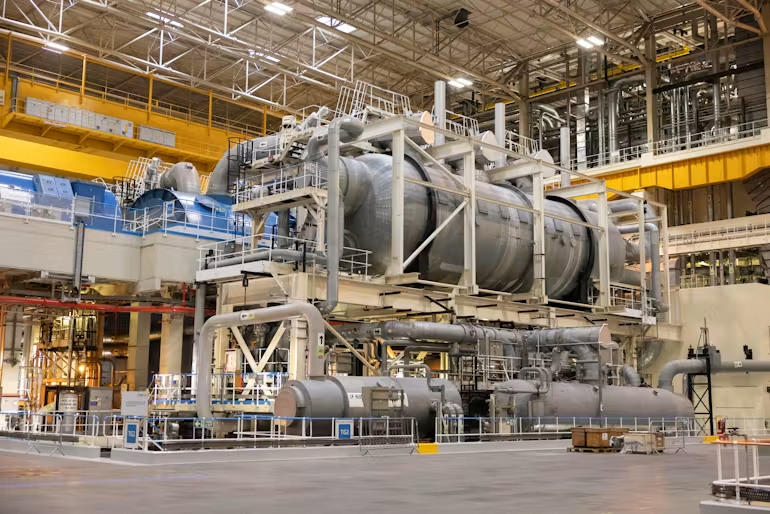
Fuel loading completed at Mochovce 4
Slovenské elektrárne has completed the loading of all 349 nuclear fuel assemblies into Unit 4 of the Mochovce Nuclear Power Plant, marking the transition from construction to the start-up phase. The five-day operation was completed on 3 July and included 312 fuel assemblies and 37 control assemblies containing uranium dioxide fuel. The VVER-440 reactor will now undergo pre-criticality tests, followed by the first controlled nuclear chain reaction and a series of power ascension tests under the supervision of Slovakia’s Nuclear Regulatory Authority. These tests will verify the reactor core’s performance before the unit reaches full power. Once operational, the 471 MWe reactor will significantly strengthen Slovakia’s low-carbon electricity supply. Together with the other Mochovce units and the Bohunice nuclear power plant, nuclear energy is expected to provide about 77.5% of the country’s electricity consumption, the highest share of nuclear generation in the world. Mochovce Unit 3 entered commercial operation in 2023.
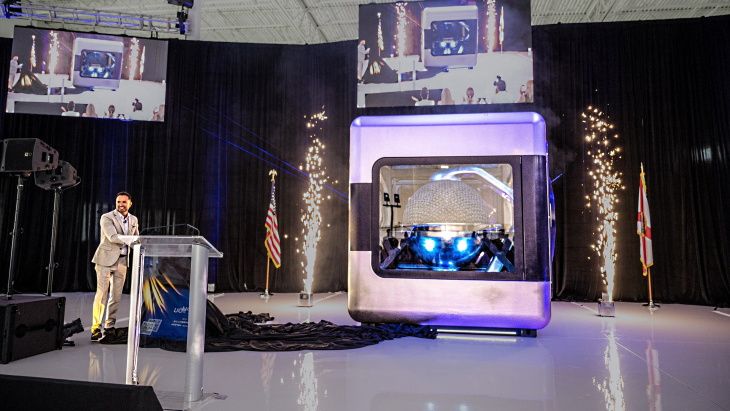
US-based Ampera Inc has announced the completion of what it describes as the world’s first full-scale, 3D-printed nuclear reactor module, marking a significant milestone in the development of advanced microreactor technology. The unveiled module includes both the reactor core and pressure vessel and is intended for the company’s thorium-based, subcritical microreactor design. Manufactured using advanced additive manufacturing techniques, the reactor features a 3D-printed silicon carbide core designed to operate for up to 30 years without refuelling. Ampera aims to provide factory-built, transportable, zero-emission power systems for applications including AI data centres, defence, industry and maritime transport. The company is also developing proprietary TRISO thorium fuel and has expanded its activities by establishing an Australian subsidiary to secure thorium supplies. Ampera has initiated pre-licensing discussions with the US Nuclear Regulatory Commission and is pursuing commercial partnerships to accelerate deployment of its modular reactor technology.
Deep Fission receives prototype reactor canister
Deep Fission has received the prototype reactor canister for its pilot project in Kansas, marking an important milestone in the development of its underground small modular reactor (SMR) concept. The factory-built canister has completed fabrication and hydrostatic testing and will be used in the company’s proof-of-concept programme to validate installation methods, infrastructure, and operational procedures under non-nuclear conditions. The demonstration involves a nearly full-scale borehole designed to test the deployment of commercial-grade components before nuclear fuel is introduced. Deep Fission is simultaneously advancing the design of its commercial reactor and a full-scale demonstration borehole. The company’s Gravity reactor is intended to be installed approximately 1.6 kilometres underground and use conventional pressurised water reactor technology with low-enriched uranium fuel to produce 15 MWe per unit. By combining technologies from the nuclear, geothermal, and oil and gas industries, Deep Fission aims to improve safety, reduce land use, and accelerate deployment of underground nuclear power systems.
UK’s Sizewell B Nuclear Power Plant Granted A 20-Year Life Extension
The UK government has approved a 20-year lifetime extension for the Sizewell B nuclear power plant, allowing the 1,198 MWe pressurised water reactor in Suffolk to continue operating until 2055 instead of closing in 2035. Owned by EDF, Sizewell B currently generates around 3% of the UK’s electricity, supplying the equivalent of 2.5 million homes. The extension supports the government’s strategy to expand nuclear energy as part of its “golden age of nuclear” initiative, aimed at meeting rising electricity demand from electric vehicles, low-carbon heating and AI data centres while strengthening energy security and reducing carbon emissions. Under the agreement, EDF will receive a guaranteed price for electricity generated after 2035, while Centrica will help finance the investments required for long-term operation. With this decision, all nine of the UK’s operating commercial nuclear reactors have secured agreements to continue operating beyond their original retirement dates, alongside the construction of new reactors at Hinkley Point C and the planned Sizewell C project.