
USA, South Korea targeting six AP1000 and two APR1400 units
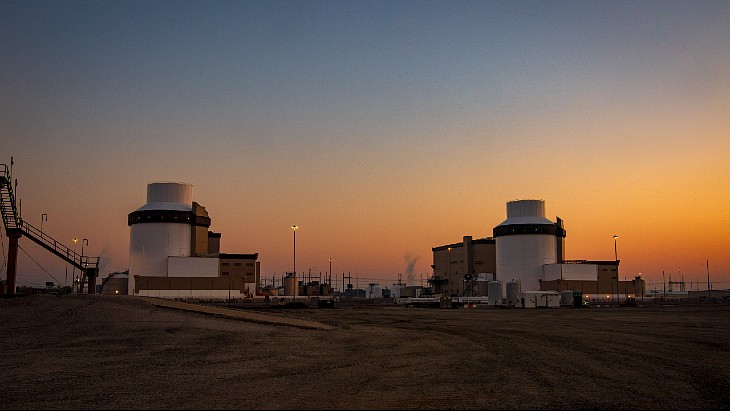
The US and South Korean governments have outlined a USD 120 billion framework agreement for the construction of six Westinghouse AP1000 and two South Korean APR1400 reactors in the United States. The planned investment includes USD 100 billion in overnight construction costs and USD 20 billion in contingency reserves, although the sites for the eight units have not yet been specified. The projects are intended to support the US goal of having 10 large reactors under construction by 2030.
The agreement envisages an initial USD 10 billion advance payment by the end of 2026, primarily for long-lead equipment, as well as a potential significant minority equity investment in Westinghouse by South Korean companies.
The first projects are expected to comprise two AP1000 units at federal sites. The framework also includes a potential one-time waiver allowing up to two APR1400 reactors to be built in the US, following a 2025 settlement between Westinghouse and South Korean nuclear companies. Cameco estimates this could generate approximately USD 2 billion in value for Westinghouse per APR1400 through licensing, engineering, procurement, subcontracting and fuel services.
The agreement is intended to deepen US-South Korean nuclear cooperation and strengthen their respective nuclear supply chains.
Hinkley Point B Nuclear Station Transferred To NDA For Decommissioning
The two-unit Hinkley Point B nuclear power station in Somerset, England, has been transferred from operator EDF to the UK’s Nuclear Decommissioning Authority (NDA) for decommissioning. The site will be managed by NDA subsidiary Nuclear Restoration Services (NRS), which is also responsible for the neighbouring Hinkley Point A site. Around 250 EDF employees will transfer to NRS to support the decommissioning programme.
Both Advanced Gas-cooled Reactors (AGRs) began supplying electricity to the grid in 1976 and operated until 2022. Together, the station generated more than £15 billion in economic value for the UK between 1976 and 2024. Both reactors have now been successfully defueled, with more than 4,900 spent-fuel elements removed over three years and transported to Sellafield for storage.
The defueling programme was completed on schedule and within budget under the oversight of the Office for Nuclear Regulation. Hinkley Point B is the second AGR station to transfer to the NDA, following Hunterston B in April 2026. Dungeness B is also expected to transfer before the end of the decade, followed by other AGR sites as they cease generation.
Constellation, Amazon agree nuclear-focused power purchase deal
Amazon has signed a 20-year power purchase agreement with Constellation that will support a 190 MW capacity uprate and a 20-year operating-life extension for the Calvert Cliffs nuclear power plant in Maryland. The agreement covers 690 MW of electricity and is expected to enable Constellation to invest about USD 3 billion in the facility, with the additional capacity to be added between 2030 and 2032.
Calvert Cliffs currently has two pressurised water reactors with a combined output of 1,790 MW. The units began operating in 1975 and 1976 and are currently licensed to operate until 2034 and 2036. The long-term agreement with Amazon is expected to provide the revenue certainty needed to seek further licence renewals and support investment in additional clean-energy generation at the site.
Calvert Cliffs is Maryland’s only nuclear power plant, supplying about 40% of the state’s total electricity generation and 80% of its clean electricity. Constellation is also exploring the construction of up to 2,000 MW of new advanced nuclear capacity at the site, potentially doubling its output.
The agreement reflects growing interest from technology companies in securing reliable, around-the-clock low-carbon electricity for data centres and other energy-intensive operations.
Four key issues when building nuclear in different countries, according to Rosatom
Rosatom chief sustainability officer Polina Lion has identified four priorities for expanding nuclear power capacity internationally: delivering projects on time and within budget, strengthening industrial capacity and supply chains, developing the workforce, and securing financing. Speaking at the World Nuclear Symposium in London, she said Rosatom currently has an international portfolio of 45 nuclear units in 10 countries and has completed projects in five countries since 2010.
Lion stressed that project schedules are a shared responsibility of vendors, customers and host countries, with regulatory approvals and limited national nuclear expertise often causing delays, particularly in newcomer countries. She also highlighted the need for standardisation, resilient supply chains and greater localisation. Rosatom’s overseas projects involve around 100 companies on average, while the company has increased its production capacity for key nuclear equipment from one to three sets per year.
Workforce development is another major challenge, as training a nuclear engineer takes around six years. Finally, Lion emphasised the need for greater access to financing, noting growing interest from international financial institutions and private investors. She said SMRs may be particularly attractive to financiers because of their shorter construction times and lower capital requirements. Overall, she stressed that global nuclear expansion requires partnership, trust and dialogue.
Hinkley Point C completes 620-metre tunnel for fish
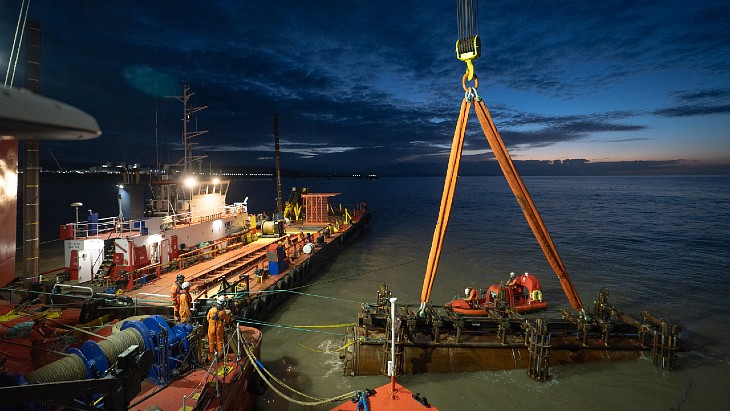
A tunnel boring machine has completed a 620-metre tunnel at Hinkley Point C in southwest England, forming part of the nuclear power plant’s system for returning fish to the sea. The five-month project brings the total length of marine tunnels excavated for the plant to more than eight kilometres. The tunnel boring machine was lifted out by a floating crane and will be cleaned before being reused elsewhere.
Hinkley Point C will use seawater for cooling and incorporates several measures to protect marine life. Specially designed intake heads reduce the velocity of water entering the cooling tunnels, allowing fish to escape. The plant has two 3.4-kilometre intake tunnels, each six metres in diameter, and a 1.8-kilometre outfall tunnel with a seven-metre internal diameter. An underwater acoustic “fish disco” system is also planned to deter fish from approaching the intakes, while the fish return system will transfer fish entering the cooling system back to the sea.
EDF estimates the fish protection measures will cost GBP700 million (USD955 million), making them the most extensive of their kind at any power plant.
Hinkley Point C comprises two 1,630 MWe EPR reactors. Construction began in 2018, with Unit 1 now expected to begin operating in 2030.