
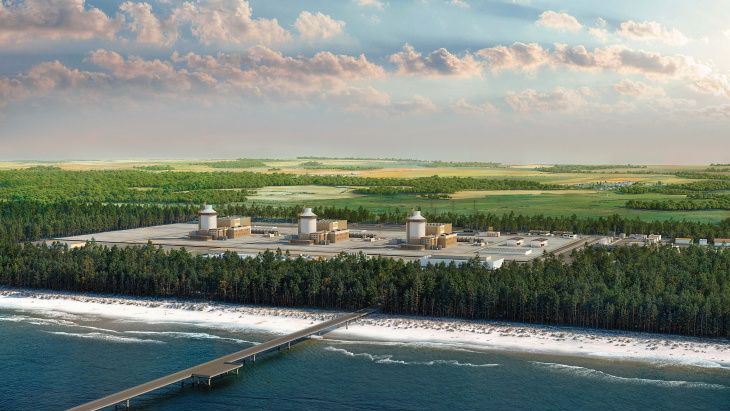
Poland’s National Atomic Energy Agency has confirmed that the Lubiatowo-Kopalino site in northern Poland is suitable for the construction of the country’s first commercial nuclear power plant. Specialists evaluated geological, hydrological, meteorological, and safety conditions, concluding that there are no factors preventing safe construction and operation. The assessment supports plans by Polskie Elektrownie Jądrowe to build three Westinghouse AP1000 reactors at the site. Construction of the first unit is expected to begin in late 2028, with operation planned for 2036. Poland has already secured PLN 60 billion in state financing, while the total project cost is estimated at €45–47 billion. An engineering and construction contract with the Westinghouse–Bechtel consortium is expected in 2026. The project is central to Poland’s strategy to reduce coal dependence, improve energy security, and support economic development.
An international operation led by the USA, Venezuela, the UK, and the International Atomic Energy Agency successfully removed all remaining highly enriched uranium (HEU) from Venezuela’s shut-down RV-1 research reactor near Caracas. About 13 kilograms of HEU were securely transported under military protection to the Savannah River Site in the United States, where the material will be processed into high-assay low-enriched uranium (HALEU). The mission was completed in less than six weeks and involved close cooperation between the US Department of Energy, Venezuelan authorities, and UK transport specialists. The RV-1 reactor had been inactive since 1991 and originally used HEU fuel supplied by the US and UK. Removing such material reduces nuclear proliferation and security risks associated with legacy research reactors. According to the IAEA, similar international programmes have already converted or shut down more than 100 reactors worldwide and removed thousands of kilograms of HEU.
Rosatom has completed manufacturing the first RITM-200 reactor unit for the nuclear-powered icebreaker Leningrad, currently under construction as part of Russia’s Project 22220 fleet. The reactor was produced at the ZiO-Podolsk plant and is the eleventh RITM-200 unit manufactured so far. Each Project 22220 icebreaker uses two RITM-200 pressurised water reactors, providing high power output in a compact design with a 40-year service life. The reactors are designed to power vessels capable of breaking through ice up to three metres thick along the Northern Sea Route. Rosatom stated that the reactor completed precision assembly testing to ensure long-term reliability before installation into the ship’s hull. Russia currently operates several nuclear icebreakers and is constructing additional vessels, including the larger Rossiya equipped with more powerful RITM-400 reactors. Nuclear icebreakers are central to Russia’s strategy to expand Arctic shipping and strengthen transport links between Europe and Asia.
Giorgia Meloni announced that Italy is preparing a new legal framework to reintroduce nuclear energy into the country’s energy mix. The government plans to approve enabling legislation by summer 2026, followed by implementing decrees needed to restart nuclear power development. The initiative is part of Italy’s broader strategy to improve energy security, reduce dependence on imported fossil fuels, and support decarbonisation goals. Planned measures include creating a National Programme for Sustainable Nuclear Power, establishing an independent nuclear safety authority, promoting scientific research, and developing specialised workforce skills. Italy abandoned nuclear power after the 1986 Chernobyl disaster and closed its last reactors in 1990, while a 2011 referendum following Fukushima strongly rejected new nuclear projects. However, public attitudes have gradually shifted, particularly regarding advanced nuclear technologies. The government now sees nuclear energy as an important option for strengthening competitiveness, stabilising energy costs, and supporting the country’s long-term energy transition.
The International Atomic Energy Agency confirmed that radiation levels at the Barakah Nuclear Power Plant remained normal after a drone attack on 17 May 2026 caused a fire in an electrical generator outside the plant’s inner security perimeter. No injuries were reported, and emergency diesel generators safely supplied power to Unit 3. UAE authorities stated that the incident did not affect the plant’s essential safety systems. The UAE blamed the attack on a drone launched by Iran or allied regional groups, describing the incident as a dangerous escalation. IAEA Director General Rafael Grossi expressed serious concern and reiterated that military actions threatening nuclear facilities are unacceptable. Barakah, equipped with four South Korean APR1400 reactors, provides more than one-fifth of the UAE’s electricity production. The country views nuclear energy as a key component of its strategy to diversify away from oil and natural gas dependence.
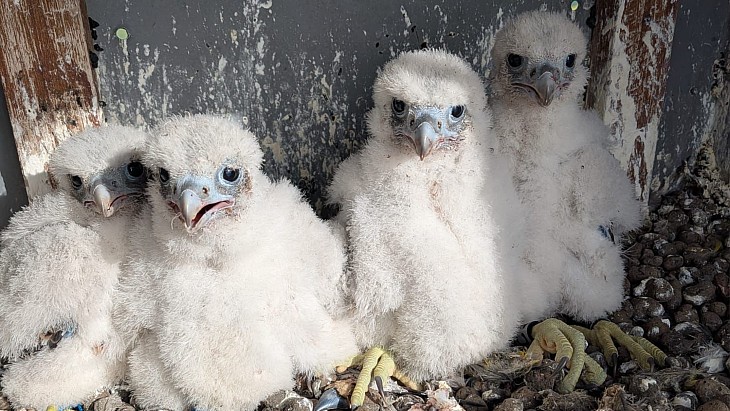
CEZ Group announced that four peregrine falcon chicks have hatched at the Dukovany Nuclear Power Plant as part of an environmental protection programme launched in 2020. The falcons are nesting in a specially installed nesting box located more than 120 metres high on one of the plant’s ventilation chimneys. With this year’s hatchlings, the pair has successfully raised 18 chicks at the site. The initiative is carried out in cooperation with the wildlife organisation ALKA Wildlife, whose experts confirmed that the chicks are healthy and well cared for. Similar conservation programmes also operate at the Temelín Nuclear Power Plant, where peregrine falcons have produced many additional chicks over recent years. Peregrine falcons, once threatened by pesticide use such as DDT, are now recovering thanks to conservation efforts. The project demonstrates how industrial infrastructure and wildlife protection can successfully coexist.