

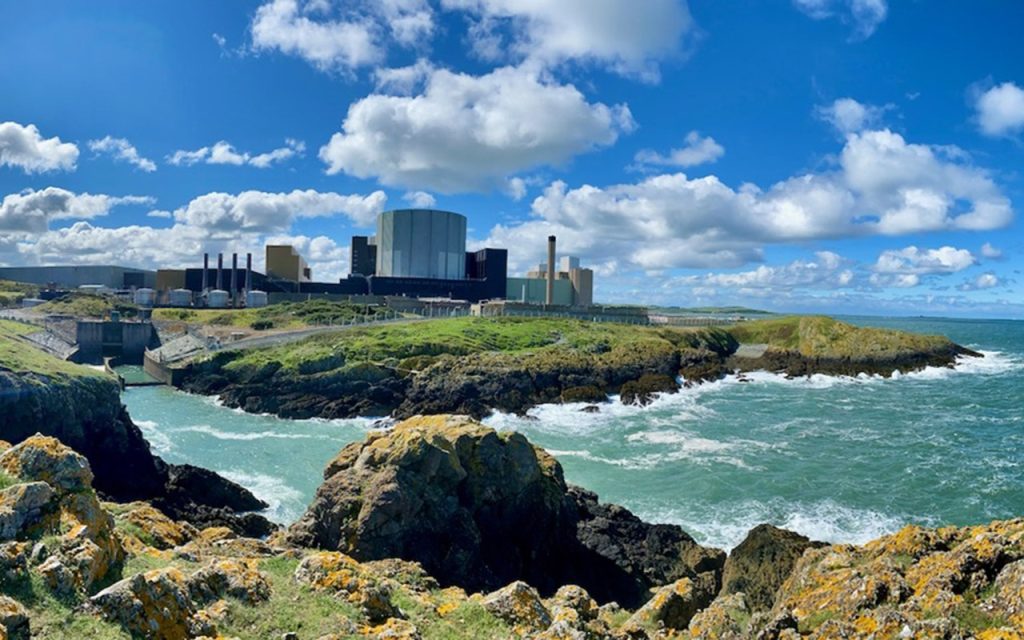
UK Chooses Wylfa For First SMRs And Announces Start Of Site Selection For New Large-Scale Nuclear Plants
The UK has chosen the island of Anglesey off the Welsh coast to host Britain’s first small modular reactors, designed by Rolls-Royce SMR, in a significant step forward for the industry.
In a statement the government said North Wales will become a beacon in the “golden age” of nuclear, delivering the UK’s first three SMRs at the Wylfa nuclear site in the north of the island, choosing it ahead of a rival site at Oldbury in Gloucestershire, southwest England.
The government also announced that Great British Energy-Nuclear (GBE-N), the body overseeing new nuclear in the UK, has been tasked with identifying suitable sites that could potentially host new large-scale reactors.
GBE-N will report back by autumn 2026 on potential sites. The energy secretary, Ed Milliband, has requested this includes sites across the UK including Scotland, where the devolved Scottish National Party government is opposed to nuclear.
Tripling of nuclear capacity is achievable, says World Nuclear Association
The tripling of global nuclear capacity by 2050 can be achieved, provided governments take immediate and sustained action to deliver on their own national targets for nuclear capacity, a report from World Nuclear Association concludes.
On Energy Day at the 2025 United Nations Climate Change Conference, COP30, in Belém, Brazil, World Nuclear Association previewed findings from its forthcoming report, World Nuclear Outlook Report 2025. The goal of tripling global nuclear capacity by 2050 was endorsed by 31 countries at COP28 and COP29. At the moment there are about 440 nuclear power reactors with a combined capacity of almost 397 GWe operating in 31 countries with at least 70 power reactors under construction, which will add another 77 GWe. Nuclear generation reached an all-time high of 2,667 TWh in 2024.
Bulgaria’s Regulator Approves Site Selection For Eighth Nuclear Plant At Kozloduy
The Bulgarian Nuclear Regulatory Agency (NRA) has authorised Kozloduy NPP-New Build, the state-owned company in charge of new-build, to begin site selection activities for a planned new eighth nuclear power unit at the Kozloduy nuclear power station in northern Bulgaria.
The company said in a statement it had received the permit on 27 October 2025 after a detailed regulatory review. Kozloduy NPP-New Build submitted an application in February 2025.
The statement said the permit marks the formal start of the siting and licensing process for Unit 8, the second of two new reactor units proposed for the Kozloduy site expansion project.
Belarus to build third unit at nuclear power plant
Belarus has decided to build a third unit at its first nuclear power plant – and is also going to start surveys for a second plant which may be needed to meet future energy demands.
The decision was taken at a meeting on Friday, hosted by President Alexander Lukashenko. The government has stressed the need for new capacity and studies have been carried out to decide whether that will be in the form of a new unit at the country’s first nuclear power plant, in Ostrovets, or at a new site in the east of the country.
Lukashenko, according to an account of the meeting on the President’s website, noted that the population of Ostrovets had nearly doubled to 15,000 people with many high quality jobs and “graduates from energy faculties dream of getting a job there”.
Power Utility And City Of Helsinki Begin Site Assessment For Small Modular Reactor
Power utility Helen and the City of Helsinki are launching a project to assess three potential sites for a small modular reactor (MR) in Finland.
Helen said the three sites – all in or around Helsinki – are the Vuosaari and Salmisaari power plant areas and the Norrberget area. Vuosaari and Salmisaari are already being used for energy production operations and are managed by Helen.
Helen announced a nuclear energy programme last year with the aim of building an SMR plant that will strengthen the security of supply in Helsinki and Finland as a whole.
Ukraine’s Zaporizhzhia Nuclear Plant Regains Access To Backup Electricity From Grid
Ukraine’s Zaporizhzhia nuclear power station has regained its access to backup electricity from the grid for the first time in six months, after today’s completion of repairs to a second power line under the protection of a localised ceasefire brokered by the International Atomic Energy Agency (IAEA).
The repairs mean that for the first time since May 2025, Zaporizhzhia once again has “redundancy” in its external power supply.
However, the IAEA warned that the external electricity situation at the plant remains extremely fragile. During more than three and a half years of conflict, the site has lost all access to external electricity 10 times. Before the conflict, it was connected to the grid through 10 power lines.