
IAEA project focuses on research reactor testing of fuels and materials
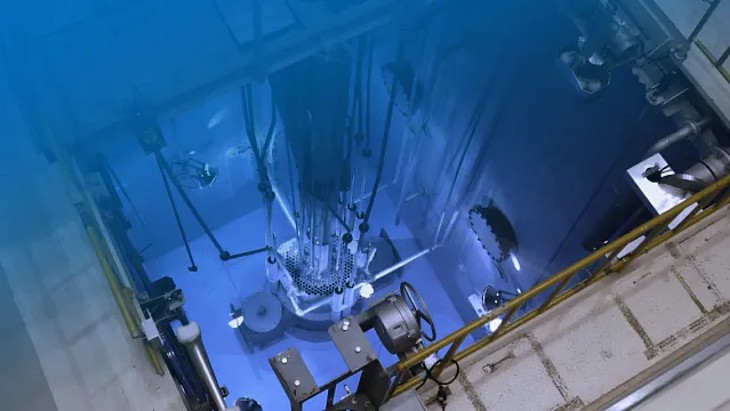
The International Atomic Energy Agency (IAEA) has launched a four-year project aimed at improving the design and execution of fuel and materials testing in research reactors. The project, Optimising the Design of Experiments for Fuels and Materials Testing in Research Reactors, will develop technical guidance to make irradiation experiments more effective, safe and efficient, supporting the development and qualification of advanced nuclear, fusion and next-generation reactor technologies. Of the 228 research reactors currently operating worldwide, 65 are involved in fuel and materials testing, with at least 14 more under construction or planned. The project will examine irradiation devices including capsules, rigs and loops, as well as technologies for monitoring and controlling experimental conditions. It will also promote information sharing, development of new testing devices and a common methodology for experiment design, with the aim of improving testing throughput and data quality while making better use of existing research reactor capabilities.
Blue Ghost to carry nuclear power source to the Moon
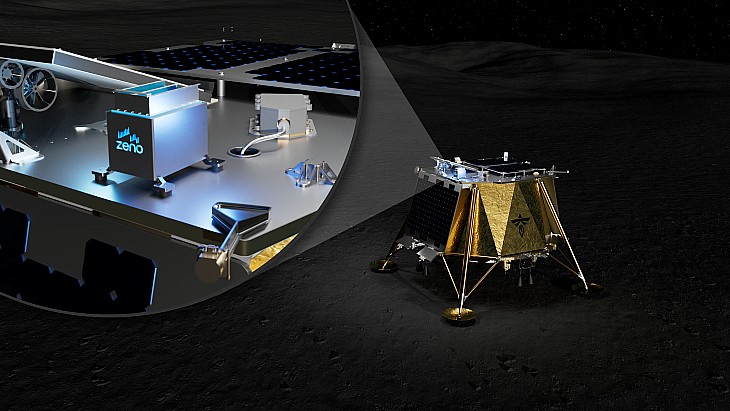
Firefly Aerospace and Zeno Power Systems have signed an agreement to fly a radioisotope heating unit (RHU) on a Blue Ghost lunar mission, potentially as early as 2028. The payload will include a 5 W(th) americium-241 RHU, designed to provide continuous heat during the extremely cold and dark lunar night without relying on solar power. The mission, part of NASA’s Commercial Lunar Payload Services programme, will initially operate during the lunar day using solar power before the RHU takes over during the lunar night. Zeno’s technology is intended to demonstrate how radioisotope heating can keep spacecraft and future lunar infrastructure operational through prolonged darkness and extreme temperatures. Unlike conventional RHUs, which typically use plutonium-238, Zeno’s system uses americium-241, an isotope that could provide an alternative because of limited plutonium-238 supplies. The mission is intended to support the development of technologies needed for longer-duration lunar exploration and NASA’s planned Moon Base activities.
Westinghouse Completes Zero-Power Criticality Testing For eVinci Microreactor
Westinghouse Electric Company has completed zero-power criticality testing of its eVinci microreactor, validating the reactor’s core design assumptions and supporting models. The testing was carried out with Los Alamos National Laboratory and Idaho National Laboratory at the National Criticality Experiments Research Center at the Nevada National Security Site. The milestone forms part of Westinghouse’s rapid product development approach, which combines testing, modelling, simulation and design improvements to accelerate technology development and reduce technical risks. The company plans further prototype testing and demonstrations to validate the eVinci reactor’s performance, operability and manufacturability. The microreactor combines heat-pipe technology, TRISO fuel, graphite core materials, control drums and a compact design intended for reliable power generation in remote and challenging environments, including defence and space applications. Westinghouse says the reactor is designed to provide continuous electricity for eight years without refuelling.
Multinational support for ATLAS maritime nuclear initiative
The International Atomic Energy Agency (IAEA)-led Atomic Technologies Licensed for Applications at Sea (ATLAS) initiative has been launched with the support of 26 countries, aiming to advance the development and deployment of civil nuclear technologies for maritime applications. The initiative is intended to facilitate cooperation between the nuclear and maritime sectors on issues including safety, security, safeguards and regulation.
ATLAS will remain technology-neutral, covering nuclear-powered commercial vessels, floating nuclear power plants and other maritime applications. The IAEA says advances in reactor, fuel and maritime technologies could enable some designs to be deployed from the 2030s. Potential applications include powering large commercial vessels, icebreakers and offshore facilities, as well as supplying electricity, heat, desalination and emergency power to remote communities and ports.
Six project groups will begin work this year on regulatory, safety, security and safeguards issues, taking into account different deployment scenarios. IAEA Director General Rafael Mariano Grossi said the initiative would help establish the institutional and regulatory framework needed for the safe, secure and peaceful use of nuclear technology at sea.
Drilling of deposition holes starts at Onkalo
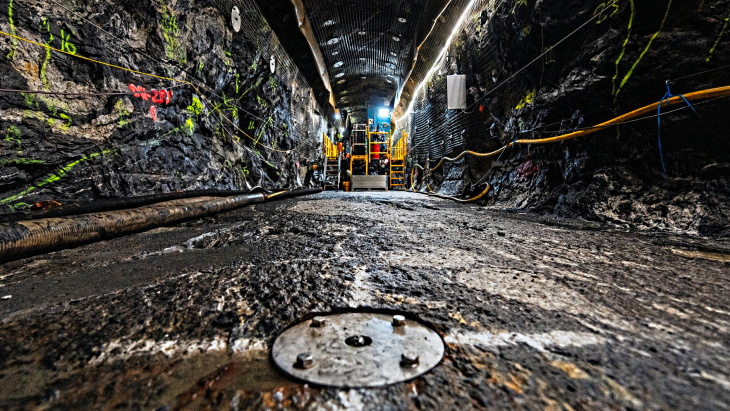
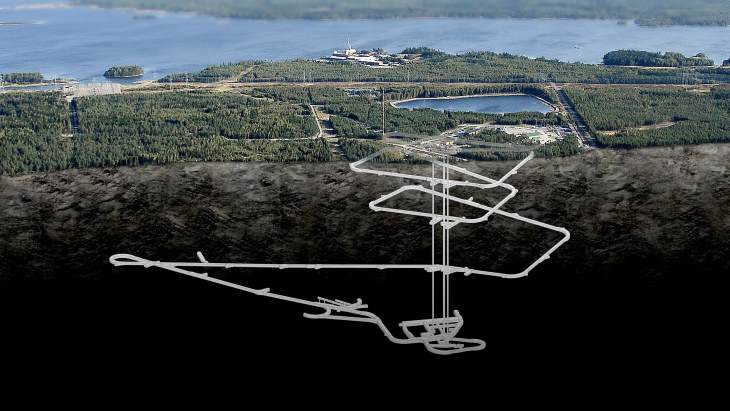
Workers have begun drilling the first deposition hole at Finland’s Onkalo underground repository for used nuclear fuel near the Olkiluoto nuclear power plant. The hole is being drilled more than 400 metres underground into 1.9-billion-year-old bedrock using a Deposition Hole Boring Machine supplied by Germany’s Herrenknecht. The completed hole will be 8.4 metres deep and 1.75 metres in diameter, with strict requirements on drilling accuracy.
The first three holes will undergo additional measurements to verify compliance with the maximum permitted deviation of 25 millimetres from the vertical centre line. Effective drilling of an eight-metre hole is expected to take about 10 hours, with a future production target of two completed holes per working week.
Used fuel at Onkalo will be encapsulated in iron-copper canisters surrounded by bentonite and placed approximately 450 metres underground. The first disposal tunnel, about 330 metres long, is planned to accommodate around 30 deposition holes.
Posiva is seeking an operating licence for the encapsulation plant and repository, with a decision potentially expected in autumn 2026. The company aims to achieve operational readiness for final disposal by the end of 2026.